The Quiet Courtyards Behind Alfama
A slow morning inside Lisbon's oldest district, away from the tram queues.
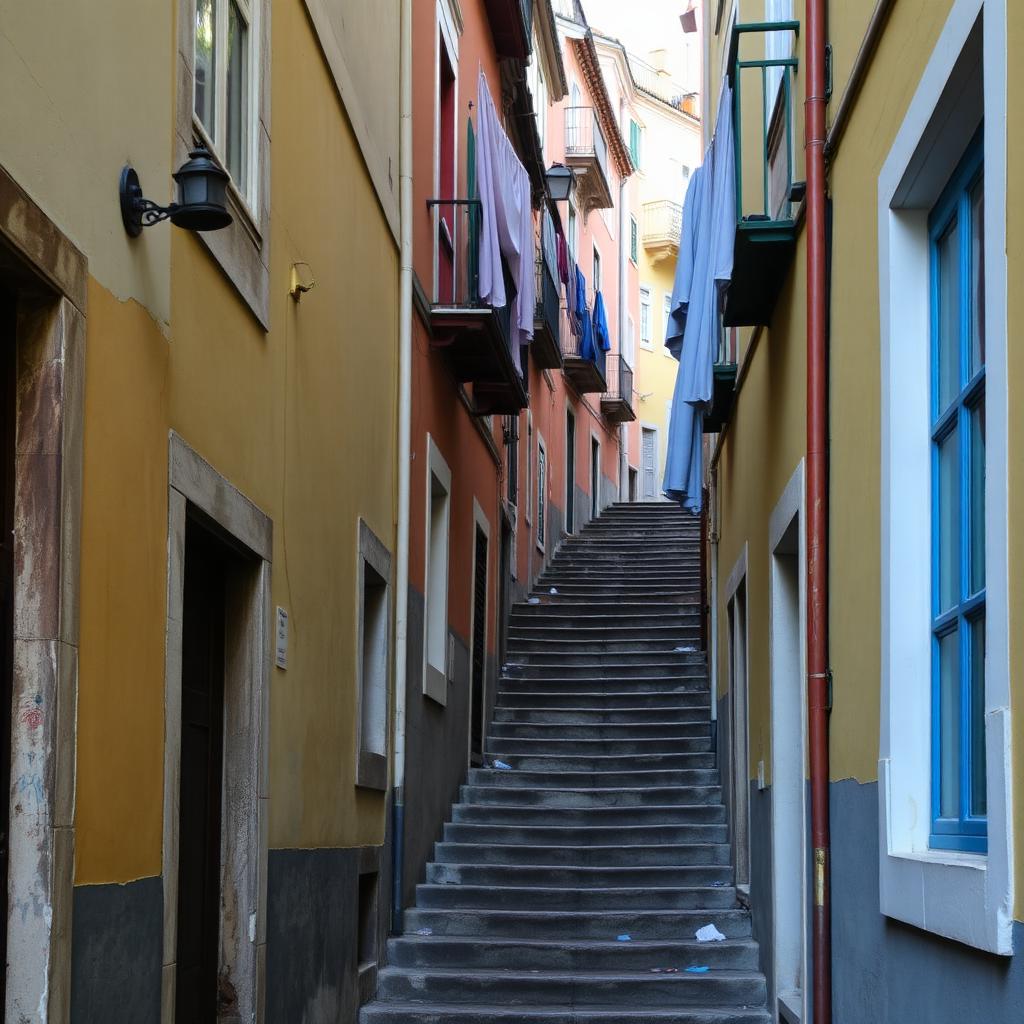
Most travellers meet Alfama from the top down, spilling out of Miradouro de Santa Luzia with a camera already raised. The neighborhood underneath them looks like a labyrinth, and that is exactly what it is. But if you slip in from the eastern edge, near Largo do Chafariz de Dentro, and let the first tiled staircase pull you sideways, Alfama becomes something else. It becomes a set of small courtyards, each one closed off by laundry lines and the smell of grilled sardines.
Starting near the fountain
The Chafariz de Dentro is a good anchor. It is one of the oldest public fountains still standing in Lisbon, and the small square around it never fills up the way Rossio does. From here, ignore the guidance app for a moment and take the narrow rise of Rua dos Remedios. Within thirty steps you will pass three doorways left open to inner patios, each with tiled walls, a few plants in old olive tins, and someone quietly folding sheets.
Alfama survived the 1755 earthquake because it sits on Moorish-era bedrock, and the courtyards you are looking into are the reason its footprint has changed so little. They were built as shared light wells, not as decoration. The tilework, the azulejos in the stairwells, arrived later, mostly in the nineteenth century, when tenants decorated small shared walls the way people now decorate refrigerators.
Where to slow down
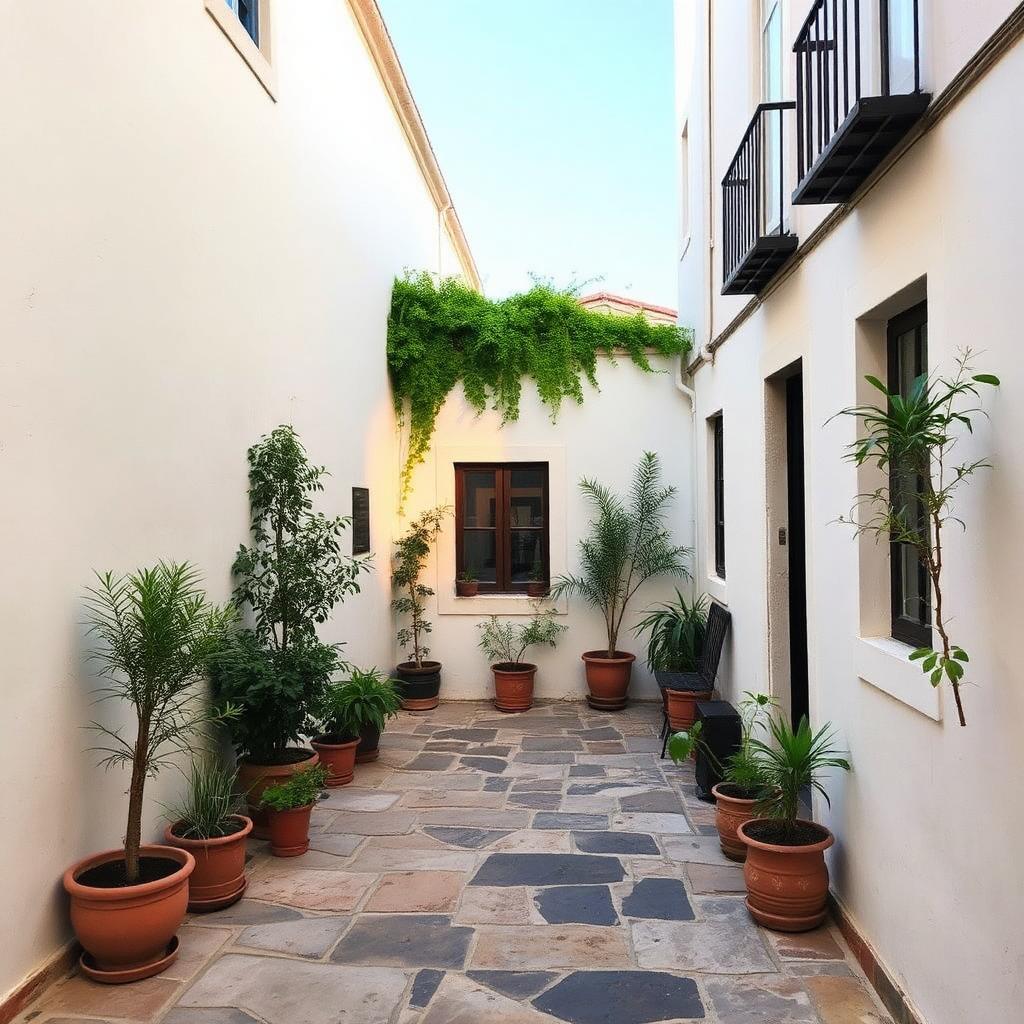
The unmarked courtyard behind Beco do Carneiro is the one photographers know but rarely publish. Two whitewashed buildings lean toward each other across a passage barely wide enough for shoulders. In the morning, the sun cuts a bright triangle across the tiled floor and disappears again by ten. Stand there for two minutes and you will hear the neighborhood breathe: a radio tuned to fado on low volume, a kettle, someone sweeping.
A second favourite is Pátio Dom Fradique, near the castle wall. It is technically a private courtyard, but the wooden gate is usually open during the day. Inside there is a lemon tree, a stone bench, and the back windows of six apartments. Do not linger with a camera. Take a slow look, thank whoever nods at you, and leave the space as you found it.
For a longer sit, walk down to Largo de São Miguel and order a coffee at the small counter to the right of the church. The tables outside face a triangular plaza that fills for maybe forty minutes a day, when children come out of the small elementary school. The rest of the day it belongs to older men and their newspapers.
A note on respect
Alfama is not a museum, and that is precisely what makes it worth visiting. People live here, most of them older, many of them on rent-controlled leases that will not outlive them. If a door is open, that is not an invitation. If a courtyard is quiet, keep it that way. Cameras should stay at chest height and never point directly at a window.
Fado houses concentrate on Rua de São Pedro, and the tourist-facing ones start at around forty euros a head. Skip them the first night. Instead, walk up to Tasca Bela near the Miradouro das Portas do Sol after ten in the evening. The fado there is informal, sometimes performed by whoever happens to be at the bar, and the audience is mostly local.
Practical notes
- Enter the district from the east, near Santa Apolónia station, not from the top.
- Weekday mornings before nine are the calmest, and the light is best for photography.
- Wear shoes with grip. The polished basalt cobbles are treacherous when they are wet.
- Cash still matters at neighborhood tascas. Bring some small notes and coins.
Alfama rewards a second and third visit more than a first. The courtyards do not perform for anyone, and once you have found two or three that feel right, the neighborhood becomes a place you return to, quietly, at odd hours.